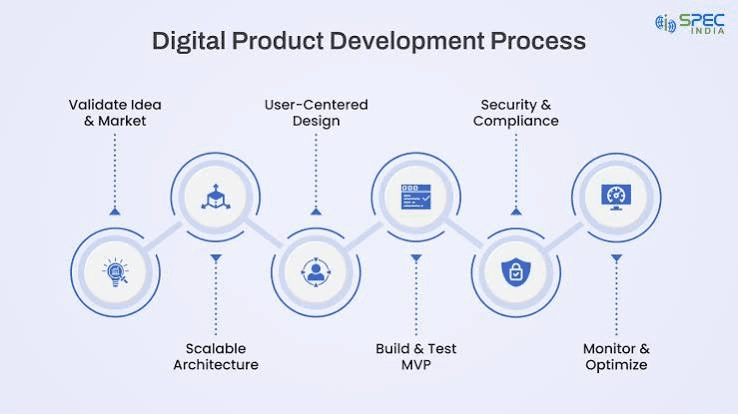
Building Better Digital Products Through Continuous Improvement
Launching a digital product is not the end of the development process. In many ways, it is the beginning of a continuous cycle of learning, improvement, and innovation.
Customer expectations change quickly. New technologies emerge, competitors introduce new capabilities, and users discover new ways of interacting with digital products. Organizations that continuously evaluate and improve their products are better positioned to remain relevant.
The first step is understanding the customer experience. Product teams can use customer feedback, usability testing, support requests, analytics, and behavioral data to identify areas where users experience difficulty. These insights can help teams prioritize improvements that provide meaningful value.
Engineering teams also play a critical role in continuous improvement. Application performance, reliability, security, scalability, and maintainability should be monitored throughout the product lifecycle. Technical debt that is ignored for too long can eventually slow development and increase operational costs.
Design is another important component. Small improvements to navigation, accessibility, workflows, and interface clarity can significantly improve the overall user experience. UX teams can test different approaches and use feedback to refine product experiences.
Cross-functional collaboration makes the process more effective. Product managers understand business priorities, designers focus on user needs, engineers understand technical possibilities, and analysts provide data-driven insights. When these perspectives come together, teams can make better decisions about what to improve and why.
Continuous delivery practices can also help organizations release improvements more efficiently. Automated testing, monitoring, deployment pipelines, and controlled releases allow teams to introduce changes while reducing unnecessary risk.
The most successful organizations view product development as a learning process rather than a one-time project. They measure results, listen to users, learn from failures, and continuously refine their products.
Ultimately, continuous improvement is about creating a product that becomes more useful over time. When organizations combine customer insight, technology, design, analytics, and collaboration, they can build digital experiences that continue to deliver value in a rapidly changing environment.
Hashtags:
#ProductDevelopment #UXDesign #SoftwareEngineering #ProductManagement #DigitalProducts #Innovation #Technology #CustomerExperience #Agile #ContinuousImprovement