Essential Website Design Features Every Poulsbo Business Should Have | The Kitsap
A potential customer visits our website, struggles to find basic information, and leaves without contacting us. For businesses investing in their online presence, this can mean losing valuable opportunities. With effective Poulsbo Web Design, we can create a website that makes it easier for customers to understand our services, explore our offerings, and take the next step toward working with us.
For small businesses, a website is often the first place customers go to learn about a company before making a decision. Whether we run a local shop, a restaurant, a professional service, or a growing company, our website should communicate trust, provide useful information, and make every interaction simple. By choosing the right design features, we can create a welcoming online experience that supports our business goals.
Why Our Business Needs Professional Website Design Poulsbo
Our website represents our business even when we are unavailable to speak with customers directly. Visitors should be able to understand what we offer, who we serve, and how they can contact us without unnecessary effort.
Professional Website Design Poulsbo businesses can benefit from should focus on clarity, usability, and consistency. A well-organised layout, readable text, relevant images, and clear navigation help visitors explore our services comfortably.
For example, if we operate a home improvement company, visitors should quickly find our service list, project photographs, service areas, and contact information. If we manage a restaurant, our menu, opening hours, location, and reservation details should be easy to access.
When we prioritise these essentials, we make it easier for potential customers to evaluate our business and decide whether our services meet their needs.
Simple Navigation That Helps Customers Find Information
A website can contain excellent information and attractive visuals, but visitors may still leave if they cannot find what they need. Simple navigation helps us prevent this problem.
We should organise our website around the information customers are most likely to look for. A straightforward menu might include:
Home
About Us
Services or Products
Testimonials
Contact Us
Depending on our business, we may also need dedicated pages for pricing, frequently asked questions, appointment booking, or service locations.
We should use familiar menu labels instead of complicated terms that confuse visitors. Important pages should be accessible within a few clicks, and the navigation should remain consistent throughout the website.
When we make information easy to find, we reduce frustration and give customers a smoother experience. This is particularly important for people visiting our website for the first time.
Mobile-Friendly Layouts for Customers on the Go
Many customers explore local businesses using smartphones while travelling, shopping, or comparing available services. If our website is difficult to use on a smaller screen, we risk creating a poor first impression.
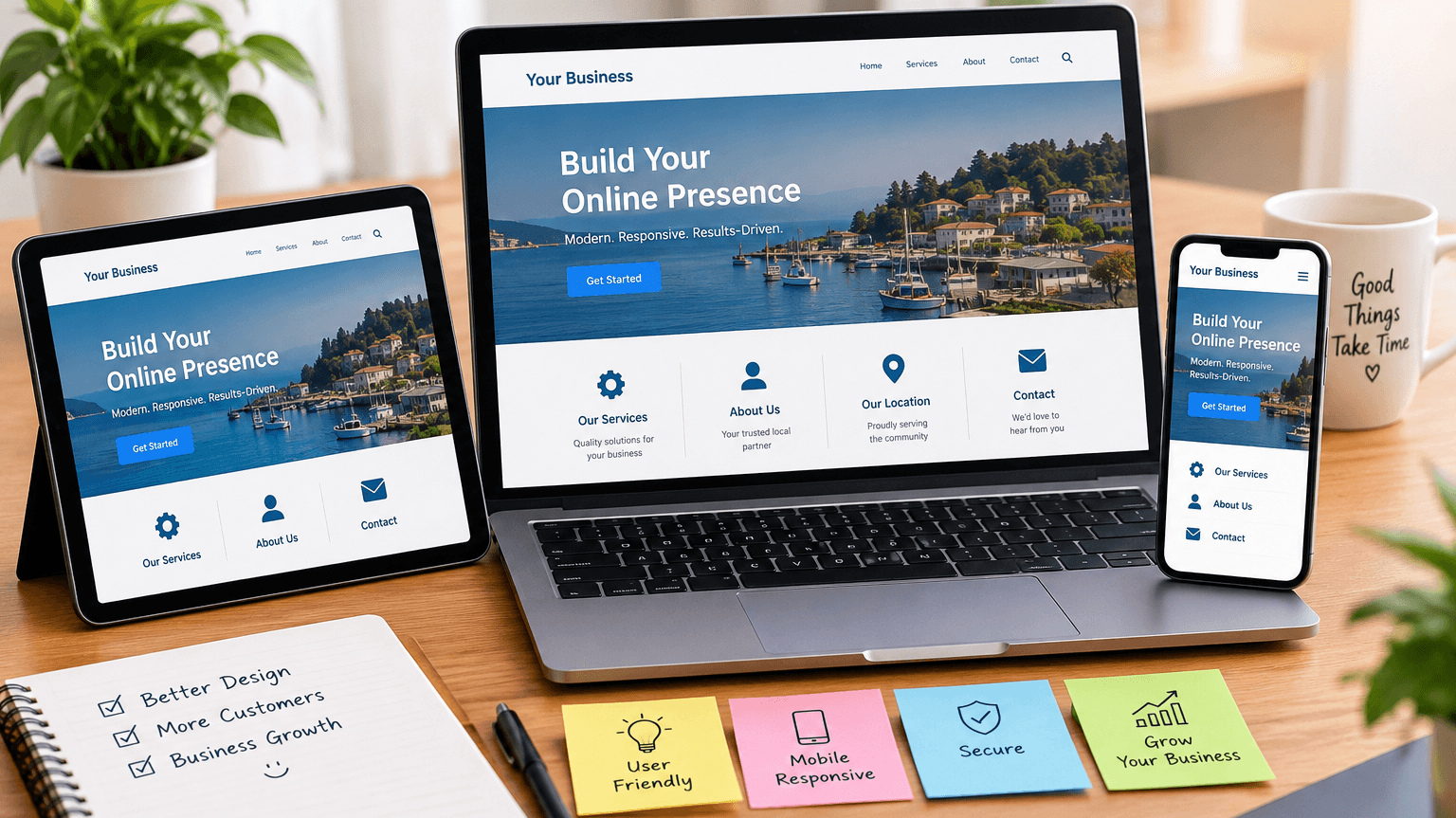
A mobile-friendly design adjusts the layout to different screen sizes without making visitors zoom in or scroll sideways to read information.
We should make sure that:
Text remains readable on smaller screens.
Buttons are large enough to tap comfortably.
Images fit the screen without affecting the layout.
Contact details are easy to locate.
Forms work properly on mobile devices.
For example, someone searching for a nearby repair service may want to call us immediately rather than navigate through several pages. A clearly displayed phone number and a prominent contact button make that action easier.
Our goal should be to provide a consistent experience across smartphones, tablets, laptops, and desktop computers.
Custom Website Design Poulsbo Businesses Can Use to Stand Out
Every business has its own identity, audience, and goals. A website should reflect these differences rather than make our company look identical to every competitor.
Custom Website Design Poulsbo businesses choose can help us create a digital experience that reflects our brand personality and communicates what makes our services valuable.
We can establish a consistent visual identity through colours, typography, photography, icons, and page layouts. For instance, a local bakery might use warm colours and inviting product photographs, while a financial consulting firm may prefer a clean layout with professional imagery.
We should also consider how our website tells our business story. A clear introduction, genuine photographs, team information, and examples of completed work can help visitors understand who we are.
Rather than adding decorative elements simply to make a website look impressive, we should select design features that support our message and make our offerings easier to understand.
Clear Calls to Action That Encourage Customer Enquiries
A website should not only present information; it should also help visitors take the next step.
A call to action, commonly known as a CTA, is a button or message that guides visitors toward a useful action. Depending on our business, this might involve requesting a quotation, booking an appointment, making a purchase, or contacting our team.
Effective examples include:
Request a Free Quote
Book an Appointment
Explore Our Services
Contact Our Team
Shop Our Collection
We should place these buttons where visitors naturally expect them, such as after a service description or near the end of a relevant page.
Our wording should be specific and easy to understand. Instead of using a vague button such as "Click Here," we can tell customers exactly what happens next.
We should also avoid overwhelming visitors with too many competing buttons. A clear primary action on each important page helps people move forward with confidence.
Contact Forms and Business Information That Build Trust
Customers need a convenient way to reach us when they have questions or want to discuss our services. If our contact information is difficult to find, interested visitors may choose another business.
We should provide essential details, including our business phone number, email address, physical location when applicable, and operating hours.
A simple contact form can make enquiries easier. We generally need only the information required to respond, such as the customer's name, email address, and message. For service businesses, an optional field describing the requested service may also be useful.
We should ensure that forms work correctly and display a confirmation message after submission. This reassures visitors that their enquiry has been received.
Customer testimonials, genuine project photographs, team introductions, and clear business policies can strengthen credibility as well.
When we present accurate information and respond to enquiries promptly, we demonstrate that our business values its customers and takes their needs seriously.
Fast Loading Pages and Accessible Design
Visitors expect websites to respond quickly. When pages take too long to load, customers may become frustrated before they even see our services.
We can improve the browsing experience by using appropriately sized images, avoiding unnecessary visual effects, and keeping page layouts organised. We should also check that videos, interactive elements, and other features work without disrupting the experience.
Accessibility is equally important. Our website should accommodate visitors with different abilities and browsing needs.
Useful practices include:
Using readable font sizes and sufficient colour contrast.
Providing descriptive alternative text for meaningful images.
Labelling form fields clearly.
Making interactive elements usable with a keyboard.
Using descriptive headings to organise content.
These improvements help more people access our information comfortably. They also make the website easier to use across different devices and situations.
When we treat speed, accessibility, and usability as essential design considerations, we create a more dependable experience for everyone who visits our website.
Useful Content, Service Pages, and Customer Resources
Our website should answer the questions customers commonly ask before choosing a business. Useful content allows us to explain our services clearly and help visitors make informed decisions.
We can create dedicated service pages that describe what we offer, who can benefit from it, and what customers can expect when working with us.
For example, a landscaping company could explain its garden maintenance, lawn care, and seasonal landscaping services on separate pages. Each page could include project photographs, service details, and answers to common customer questions.
We can also include frequently asked questions, pricing guidance where appropriate, project galleries, and customer testimonials.
For businesses that want to improve their online presence, exploring web design services for Poulsbo businesses can help them understand how a professionally designed website can support their specific needs.
Our priority should be to make every page useful rather than fill the website with unnecessary information. Clear explanations and relevant resources help visitors understand our value before contacting us.
Website Security and Easy Maintenance
A business website requires ongoing attention after launch. Keeping its information accurate and its features working properly helps us maintain a reliable online presence.
We should use secure website connections, strong passwords, appropriate access permissions, and regular backups. We should also update our website platform, themes, and extensions when necessary to reduce avoidable security risks.
Routine checks can help us identify broken forms, outdated contact details, missing images, and other issues that affect the customer experience.
We should also review our website's performance using appropriate analytics tools. Understanding which pages attract attention, which services receive enquiries, and where visitors leave can help us make informed improvements.
For example, if customers frequently visit a particular service page but rarely submit an enquiry, we can review the page's explanation, contact options, and overall usability.
By maintaining our website consistently, we can keep it relevant to our customers and better aligned with our changing business needs.
Conclusion
A successful business website combines attractive design with practical features that make customers feel comfortable exploring our services. From simple navigation and mobile usability to clear calls to action, trustworthy contact information, accessible layouts, and reliable maintenance, every element should serve a purpose.
With the right Poulsbo Web Design approach, we can present our business professionally, help customers find the information they need, and create more opportunities for meaningful enquiries. Our website should grow alongside our business and continue meeting our customers' expectations.
Ready to improve your business website? Explore The Kitsap's web design services for Poulsbo businesses and discover how the right website design can support your business goals.